Shingles Missing or Lifted After High Winds? What to Check Next
Quick Answer: Missing or lifted shingles after a windstorm mean the adhesive seal or nails that hold them down have failed, usually starting at ridges, edges, and corners where wind pressure is highest. A few isolated shingles with intact neighbors are often a straightforward repair. Shingles lifted in several spots, exposed nail heads, creased tabs, or granules piling up in the gutters point to a wider problem that a ground-level look will miss. The National Weather Service classifies thunderstorm winds as severe once gusts pass 58 mph, well within the range that lifts an aging or under-sealed shingle. A close inspection within a day or two of the storm keeps a
small repair from turning into a decking or interior problem.
What Wind Does to Shingles and What to Inspect Next
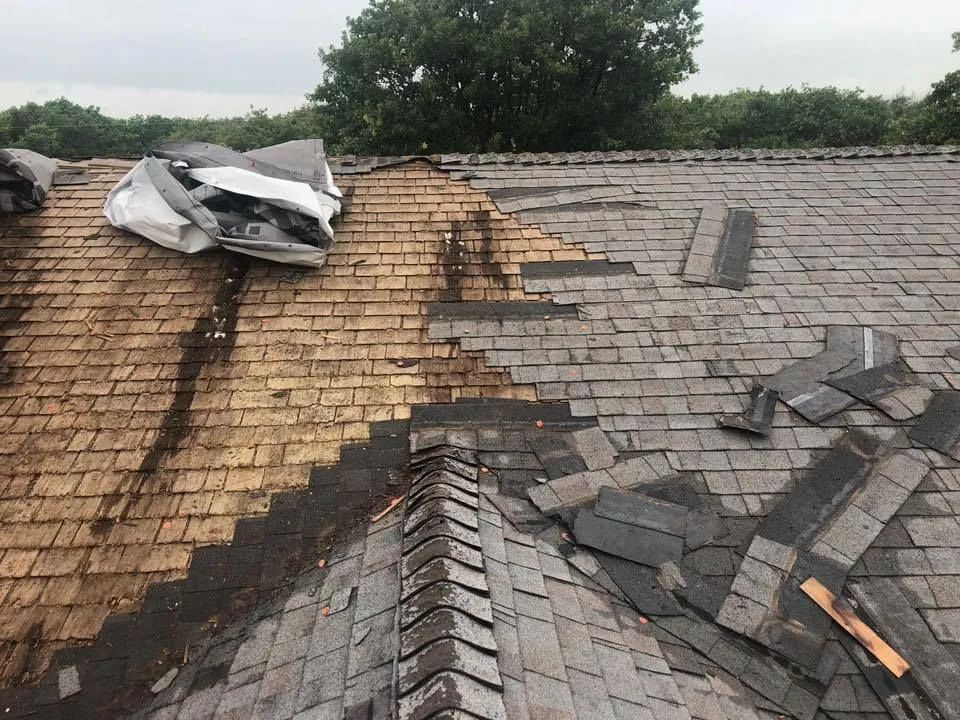
You walk the yard the morning after a windstorm and find three shingles in the flower bed, one folded over the ridge like a page in a book, and a gap near the chimney where there shouldn't be one. From the ground, the rest of the roof looks fine. That's the part that trips up most homeowners — a shingle can lift, lose its seal, and settle back down without ever leaving the roof, which means the visible damage is rarely the whole story.
Why Wind Pulls Shingles Loose in the First Place
Asphalt shingles hold themselves down two ways: nails driven through the top third of each shingle, and a strip of factory-applied adhesive along the underside that bonds to the shingle below it once the sun warms it enough to set. That thermal seal is doing most of the work against wind uplift. It's also the first thing to weaken as a roof ages, gets shaded by trees, or goes through repeated freeze-thaw cycles that never let the seal fully cure.
Wind ratings exist for a reason
Shingles are tested and classified under ASTM standards — D3161 and D7158 — that measure how much sustained wind a properly sealed shingle can resist before it lifts. A Class D rating under D7158 holds up to gusts around 90 mph, while Class H-rated shingles are built for up to 150 mph. Most standard three-tab and architectural shingles installed in Oklahoma fall in a moderate range, which matters because the National Weather Service defines a severe thunderstorm as one producing gusts of 58 mph or higher — a number this region sees several times a season.
Uplift starts at the edges
Wind doesn't push down on a roof the way most people picture it. It creates negative pressure — a lifting force — that's strongest at eaves, rakes, ridges, and hips, where the wind can get under an edge and pry. That's why missing shingles cluster at the roof's perimeter and high points rather than scattering randomly across the field.
Age lowers the threshold
A roof that's sealed and fastened correctly can shed wind well above its rated speed for years. But as the adhesive strip dries out and nails back out slightly with thermal movement, the same gust that did nothing in year three can start peeling shingles in year eighteen.
What to Check After the Wind Dies Down
A ground-level walk tells you part of the story. A closer look, from a ladder or with binoculars if you're not comfortable on the roof, tells you the rest.
Missing Shingles
Obvious, but note exactly where — perimeter, ridge, or field. A cluster along one edge suggests a wind-direction problem on that side of the roof rather than a roof-wide failure.
Lifted Or Curled Tabs
A shingle that's still attached but standing up at the corner has lost its seal even if it never blew away. Left alone, it flaps in the next wind event, works the nails looser, and lets water track underneath during the next rain. These are easy to miss from the ground because they often lie flat again once the wind stops.
Creased Or Folded Shingles
A shingle that got bent hard enough to crease has damaged fiberglass matting underneath the surface granules. It may look intact, but the crease is a permanent weak point that will crack and leak eventually, wind event or not.
Exposed Or Raised Nail Heads
Where a shingle lifted and dropped back down, the nail can back partway out or the shingle can shift enough to expose the nail head. An exposed nail is a direct path for water.
Granules Collecting In Gutters Or At Downspout Outlets
A heavier-than-normal deposit of granules after a wind event usually means shingles flexed hard enough to shed their protective surface, which is a sign of stress even on shingles that stayed put.
Bare Or Shiny Patches On The Shingle Surface
These show where granule loss has exposed the asphalt layer underneath, which accelerates UV damage and shortens the shingle's remaining life.
Tip: Photograph the roof from all four sides right after the storm, before any cleanup. Dated photos are useful documentation if you need to reference the timeline of damage later, and they let you compare the same spots after your next inspection to see if anything has shifted or worsened.
Why a Few Missing Shingles Aren't Always a Small Problem
The instinct is to treat a handful of missing shingles as a minor cosmetic fix — replace what's gone, move on. Sometimes that's accurate. Other times, the missing shingles are the visible edge of a bigger seal failure spreading across the same slope.
Isolated Damage On A Younger Roof
If the missing shingles are limited to one or two spots, the roof is under fifteen years old, and the surrounding shingles are still flat and sealed, a targeted repair usually holds. The crew replaces the missing pieces, checks the surrounding tabs for lift, and reseals or re-nails anything questionable nearby.
Scattered Damage Across Multiple Areas
When shingles are missing or lifted in several unrelated spots — not just one edge or slope — it often means the seal has failed broadly, not just where the wind happened to catch a weak point. Patching each spot individually treats the symptom without addressing why the seal let go in the first place.
Repeat Blow-Offs After Multiple Storms
A roof that loses shingles in one windstorm and then loses more in the next one is telling you something. That pattern typically shows up on roofs nearing or past the age where the adhesive seal and fastener holding power have degraded system-wide.
What a Wind-Damage Inspection Actually Looks For
A roofer checking wind damage isn't just counting missing shingles. The inspection covers the whole system, because wind stress shows up in places a homeowner wouldn't think to check.
Field Shingles Vs. Edge And Ridge Shingles
Ridge cap and edge shingles take the brunt of wind pressure and often show damage before the rest of the field does, even in a moderate storm.
Flashing At Penetrations
Chimneys, vent pipes, and skylights have flashing that can work loose under the same wind pressure that lifts shingles. A gap here leaks even with a fully intact shingle field around it.
Fastener Pattern And Depth
Underdriven, overdriven, or misplaced nails compromise wind resistance regardless of shingle quality. This is a common finding on roofs where the original installation cut corners, and it's invisible unless someone lifts a tab to check.
Underlayment Exposure
Where shingles are missing outright, the underlayment beneath is now the only barrier against water. How long that's been exposed, and whether it shows any staining or deterioration, factors into whether a spot repair is enough.
Warning:
A missing shingle with no visible interior leak does not mean no water is getting in. Water can travel sideways along the decking or underlayment before it ever shows up as a ceiling stain, sometimes tracking several feet from the actual entry point. By the time a stain appears, the decking underneath has often been wet for weeks.
Frequently Asked Questions
How soon after a windstorm should I have my roof checked?
Within a day or two if possible, and sooner if you can already see missing shingles or debris in the yard. Lifted shingles that never fully blew off are easiest to identify and reseal before another wind event finishes the job.
Can I just replace the missing shingles myself?
Matching the existing shingle color and profile is one issue; correctly resealing and integrating the new piece into the surrounding pattern without disturbing the seal on adjacent shingles is another. A mismatched or improperly sealed patch is often more vulnerable to the next windstorm than the original damage was.
Does wind damage always come with hail damage?
Not always, but the same storm system frequently produces both. A wind inspection should also check for the small, circular bruising on shingles, vents, and soft metal that indicates hail impact, since the two types of damage require different repair approaches.
What wind speed does it take to damage a roof?
It depends on the shingle's age, seal condition, and rated wind class, but the National Weather Service treats 58 mph gusts as the threshold for a severe thunderstorm, and that's within range for many aging or under-sealed shingle roofs to start lifting.
Will a few missing shingles get worse if I wait?
Often, yes. An exposed spot on the decking stays wet longer with each rain, the surrounding shingles keep flexing without a neighbor to brace against, and the next windstorm has an existing gap to work with instead of a sealed surface.
How can I tell if my roof's wind resistance is wearing out before a storm even hits?
Granule buildup in the gutters between storms, tabs that don't lie perfectly flat anymore, and a roof that's approaching or past the middle of its expected lifespan are all signs the seal is losing its grip, even without a recent wind event to trigger visible damage.
Protect Your Roof Before the Next Storm
After the wind passes, the most important step is knowing what the storm may have changed even when the roof still looks mostly intact. Missing shingles are easy to spot, but lifted tabs, weakened seals, exposed fasteners, and damaged flashing can be just as important. A timely inspection helps identify these issues before rain and another round of strong winds turn a small repair into more extensive roof damage.
For homeowners in Chickasha, OK, early attention can make a meaningful difference, especially with repeated seasonal storms. Lopez & Sons Roofing LLC
brings 30
years of experience serving across the region, with an understanding of how local wind conditions can affect aging and storm-exposed roofs. Keeping an eye on subtle changes after each significant wind event helps preserve the roof’s watertight protection and keeps small problems from becoming larger repairs.