Bruises or Dents on Shingles and Vents? What Hail Actually Does to a Roof
Quick Answer: Hail rarely leaves a hole in an asphalt shingle. Instead, it knocks loose the protective granule coating and bruises or fractures the fiberglass mat underneath — damage that's easy to miss from the ground. Soft metal on the roof, like vent boots, flashing, and gutters, dents more easily than shingles do, and those dents often mark the exact spots where the shingles took a hit too. Lost granules expose the asphalt below to direct sun, and that bare patch dries out and cracks faster than the rest of the roof around it. A bruised shingle can sit there looking fine for months before it finally gives out. A close, hands-on check after a storm is really the only reliable way to catch the damage early.
Walk your yard after a hard hailstorm and you'll probably find dented siding, stripped leaves, maybe a cracked planter by the porch. The roof, from the driveway, usually looks untouched. That's the part that trips people up — a shingle roof can take a real hit and show almost nothing from ground level.
Hail doesn't punch through shingles the way it dents a car hood. Asphalt shingles are layered and flexible enough to absorb a lot of impact without tearing open. What they don't absorb without consequence is the granule coating and the mat underneath it, and that's where the real damage happens — quietly, and usually somewhere you're not looking.
What a Hailstone Actually Does When It Hits a Shingle
A hailstone moving at speed carries real force, even one no bigger than a marble. When it lands on a shingle, that energy has to go somewhere.
Granule Loss
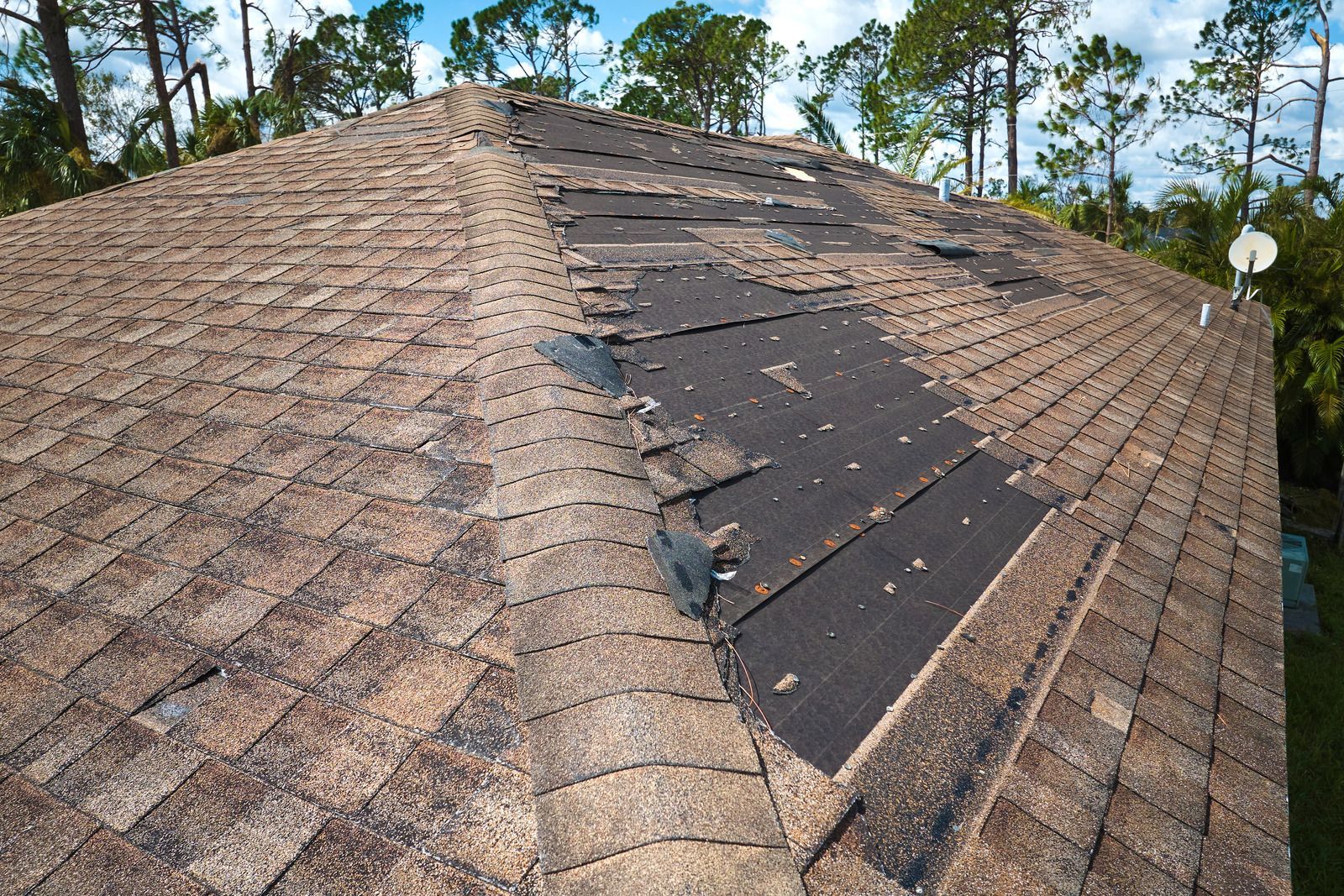
The first thing to give is the granule layer — the gritty, colored coating on top of every asphalt shingle. A hard enough impact knocks a patch of granules loose, leaving a bare spot where the black asphalt underneath shows through. From the ground, this can look like nothing more than a shadow or a smudge.
Mat Bruising
Underneath the granules and asphalt coating sits a fiberglass mat, the structural layer holding the shingle together. Hail can compress or fracture that mat without ever tearing through the surface above it. You can often feel this kind of damage before you can see it — a slightly soft, dented spot under your fingers.
Fractures And Cracks
A harder or larger hailstone can crack the shingle outright, sometimes in a spidering pattern that radiates out from the point of impact. This is the version of hail damage people picture, and honestly it's the least common of the three.
None of these show up the same way twice. Shingle age, the temperature at the moment of impact, and the angle the hail came in at all change how much damage a given stone leaves behind. A roof hit at two in the afternoon on a 95-degree July day bruises differently than the same roof hit during a cooler spring storm, because softened asphalt takes an impact differently than asphalt that's still rigid.
Why Dents on Vents and Flashing Are Worth a Second Look
Experienced roofers use a shortcut: check the soft metal first. Pipe boots, roof vents, and flashing are usually aluminum or something close to it, and they dent far more easily than a shingle does. If a plumbing vent stack or a flashing edge shows fresh dimples after a storm, hail hit that section hard enough to leave a mark on metal — which means the shingles right next to it very likely took a hit too, even if they don't show it yet.
Pipe Boots And Vent Caps
These small fixtures sit up higher than the surrounding shingles, so they catch hail at close to a direct angle. Dents here are one of the more reliable markers of a real hailstorm, not just wind-driven debris.
Step Flashing And Drip Edge
Flashing along chimneys, dormers, and roof edges is thinner than most people expect. A cluster of small dents along a flashing run usually lines up with a cluster of bruised shingles right beside it.
Gutters And Downspouts
Gutters aren't technically part of the roofing system, but they're made of the same soft aluminum as a lot of flashing, and they take hail from a similar angle. Dented gutters after a storm are a strong sign it's worth a closer look at the roof above them.
Window Screens And Sills
Aluminum screens and sills dent almost as easily as gutters. Checking them side by side across the house gives a rough read on which direction the storm came from and which slope of the roof took the worst of it.
This is why a post-storm check usually starts on the ground, walking the perimeter and scanning the metal, before anyone gets up on the roof itself. It's a faster way to figure out which sections got hit hardest instead of guessing from a ladder.
Bruises You Can Feel But Rarely See
A bruised shingle mat doesn't always look different. It usually feels different. Pressing gently on a suspected spot can reveal a slight give that a healthy shingle doesn't have. That's part of why hail assessments happen up close, walking the roof surface, rather than through binoculars or a photo taken from the yard.
The tricky part is that a bruised shingle can sit there, technically intact, for a long stretch of time. It isn't leaking. It isn't curling. It just has a soft spot where the mat took a hit, and that spot is now weaker than the shingle around it.
Tip: After any hailstorm larger than pea-sized, walk your property and check the soft metal first — mailbox, AC unit fins, gutters, vent caps — for fresh dents before assuming your roof came through clean. Dents on metal at ground level are often the clearest early sign that the roof took a real hit too.
Why Chickasha Roofs Take This Kind of Hit So Often
Central Oklahoma sits inside one of the more active hail corridors in the country, roughly along the I-35 stretch running through the central and southern Plains. Storm systems that build over the Panhandle and roll east through Chickasha, Norman, and the wider OKC metro regularly carry hail, sometimes more than once in a single storm season. The National Weather Service classifies hail as "severe" once it reaches an inch across, about the size of a quarter, and plenty of the hail that moves through this part of the state clears that mark without much trouble.
That frequency is exactly why granule loss and mat bruising matter more here than they would somewhere that sees hail once a decade. A shingle that took one bruise from a rare storm might quietly hold up for years. A shingle in a corridor that gets hit two or three times a season is stacking small weaknesses on top of each other, and each new storm leaves less margin before something finally gives.
What Impact-Resistant Shingles Change
Manufacturers test impact resistance with a standardized method, UL 2218, that drops steel balls of different sizes onto a shingle from set heights and checks for cracking on the underside. Shingles that hold up against a 2-inch steel ball dropped from 20 feet earn the top rating, Class 4. Standard shingles aren't built or rated to that level and can bruise or fracture at a lower impact threshold.
How they're built differently
Class 4 shingles typically use a reinforced or modified asphalt formulation, sometimes paired with a heavier fiberglass mat, engineered to absorb impact energy instead of passing it straight through to the mat underneath.
What the rating does and doesn't promise
A Class 4 rating means the shingle resisted cracking under controlled lab conditions. It doesn't mean the shingle is immune to granule loss or bruising in every real storm. Hail size, wind, and the angle of impact all still play a part.
Homeowners weighing a full roof replacement in a hail-prone area sometimes ask whether the upgrade is worth it. It's a fair question, and one worth a straight answer from someone who has replaced plenty of both types of shingle.
What Happens If Bruised or Dented Areas Go Unaddressed
Granules aren't just decoration. They're the shingle's sunscreen, shielding the asphalt layer underneath from direct UV exposure. Once a patch of granules is gone, the bare asphalt starts drying out faster than the rest of the roof around it. Dried-out asphalt gets brittle. Brittle asphalt cracks and curls at the edges. And a bruised or already-cracked shingle is exactly where that failure shows up first, since it was weaker than its neighbors to begin with.
This doesn't happen overnight. It's a slow process, sometimes stretching a year or two, which is part of why a homeowner can look at their roof six months after a hailstorm and see nothing wrong. The damage is there. It just hasn't finished playing out yet.
A roof quietly weakened by hail is more vulnerable to the next storm, not less. Wind that a healthy shingle would shrug off can catch the edge of a cracked or curled one and start peeling it back. That's how one hailstorm's damage sets up the next wind event's damage, even when the two storms land months apart.
Warning: Don't wait for a leak to confirm hail damage. By the time water reaches your ceiling, the shingle mat underneath has usually failed completely, and the decking beneath it may already be soaking up moisture too.
Frequently Asked Questions
Can hail damage a roof without leaving any visible holes?
Yes, and this is actually the most common outcome. Hail typically causes granule loss and mat bruising rather than punching through the shingle. Both types of damage are functional even when they're nearly invisible from the ground or in a quick photo.
How can I tell if my roof vents took hail damage?
Check for small, round dents in the metal vent caps, pipe boots, and flashing. These materials are softer than shingles, so they dent more easily and often mark the exact areas of the roof that took the hardest hits.
Does a bruised shingle mat always turn into a leak?
Not right away, but a bruised spot is weaker than the shingle around it and ages faster once the granule layer above it is gone. Left alone, most bruised areas eventually crack or fail, though the timeline shifts with sun exposure and how old the shingle already was.
What's the difference between granule loss from hail and granule loss from normal aging?
Age-related granule loss tends to spread evenly across the whole roof, especially in valleys and high-sun areas. Hail-related granule loss shows up in scattered, localized patches, often lining up with fresh dents on nearby vents, flashing, or gutters.
Are impact-resistant shingles worth considering in a hail-prone area like Chickasha?
Class 4 impact-resistant shingles are built to hold up better against the size and frequency of hail this part of Oklahoma sees regularly. They aren't damage-proof, but the reinforced mat and asphalt formulation give them a real edge over standard shingles at resisting bruising and cracking.
How soon after a hailstorm should a roof get checked?
As soon as it's safe to do so, ideally within a few days. Waiting longer doesn't make the existing damage worse on its own, but it does give wind, rain, and sun more time to work on any shingles that are already compromised.
The Real Test Comes After the Storm
Most roofs that take a real hailstorm don't fail that same week. They fail quietly, over the following year, as bruised spots dry out and cracked edges catch wind they used to shrug off without trouble. A roof can look completely fine in October and still be carrying weak spots from a June storm, waiting for enough sun and wind to finish what hail started months earlier. The roofs that hold up longest usually aren't the ones that dodged the worst storms.
They're the ones where somebody checked closely enough, soon enough, to catch the bruises before they turned into something worse, understanding what a dent in a vent cap really says about the shingles nearby. For 30
years, Lopez & Sons Roofing LLC
has worked roofs across Chickasha, OK, learning exactly where hail damage likes to hide and how quickly a small bruise can turn into a real problem once the sun gets to work on it.