Patch the Storm Damage or Replace the Whole Roof? How to Decide
Quick Answer: Patch a storm damaged roof when the damage is limited to a few spots, the surrounding shingles are still flexible and well sealed, the decking underneath is dry and solid, and the roof has plenty of service life left. Replace it when damage is spread across several slopes, the shingles are brittle or heavily worn, the roof has leaked in more than one place, the decking is soft, or you have already paid for repeated repairs. Age matters, but condition matters more. A roofer settles the question by checking how widespread the damage is, whether old shingles can be lifted without cracking, what the decking looks like, and whether a repair would hold through the next Oklahoma storm.
The storm moved through overnight, and now you are standing in the yard with a short list of facts. A handful of shingles are gone from the back slope. A roofing contractor has told you the damage is "repairable," and a neighbor down the street says the same storm convinced him to tear off everything. Both answers sound reasonable, and you are the one who has to live under whichever roof you choose.
This is one of the most common decisions a roofing crew helps with after a hard spring or fall in central Oklahoma, and there is no single rule that settles it. A small repair on the right roof is a smart, sensible fix. The same small repair on the wrong roof is a temporary bandage that fails in the next front. The goal here is to give you the same checklist a crew works through, so you can tell which situation you are in and ask good questions when someone is standing on your roof.
Why There Is No Magic Percentage
You will hear people say a roof should be replaced once a certain share of it is damaged. It is a tidy idea, and it falls apart on a real roof. Ten damaged shingles clustered in one valley are a different problem than ten damaged shingles scattered across every slope. A roof that is two years old with one torn section is a different problem than a roof that is nineteen years old with the same tear.
Roofers look at four things together instead of chasing a number.
How widespread the damage is. One slope or one section points toward repair. Damage that shows up on multiple slopes, especially those facing different directions, tells you the whole roof took the hit and the shingles everywhere may be weakened.
How old and worn the roof is. The shingle that survived the storm is still the same shingle that has been baking in Oklahoma sun for years. Age is the backdrop for every other factor.
What is underneath. Shingles are only the outer layer. The underlayment and the decking decide how much trouble a repair will turn into.
How well a repair will hold. A patch is only worth doing if the area around it is healthy enough to keep the patch in place.
When those four line up in your favor, a repair is a fair answer. When two or three line up against you, replacement is usually the more honest recommendation.
Start With Where the Damage Is
Walk the outside of the house first, then look at the roof from several angles. Binoculars help, and a phone camera with zoom helps even more. You are looking for the pattern, not each individual shingle.
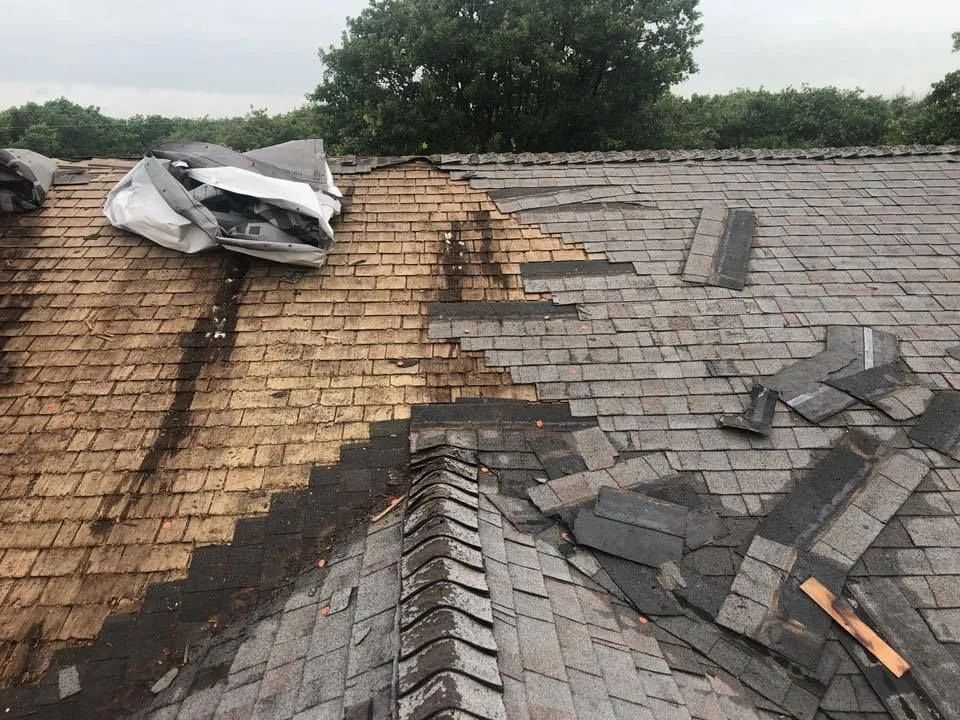
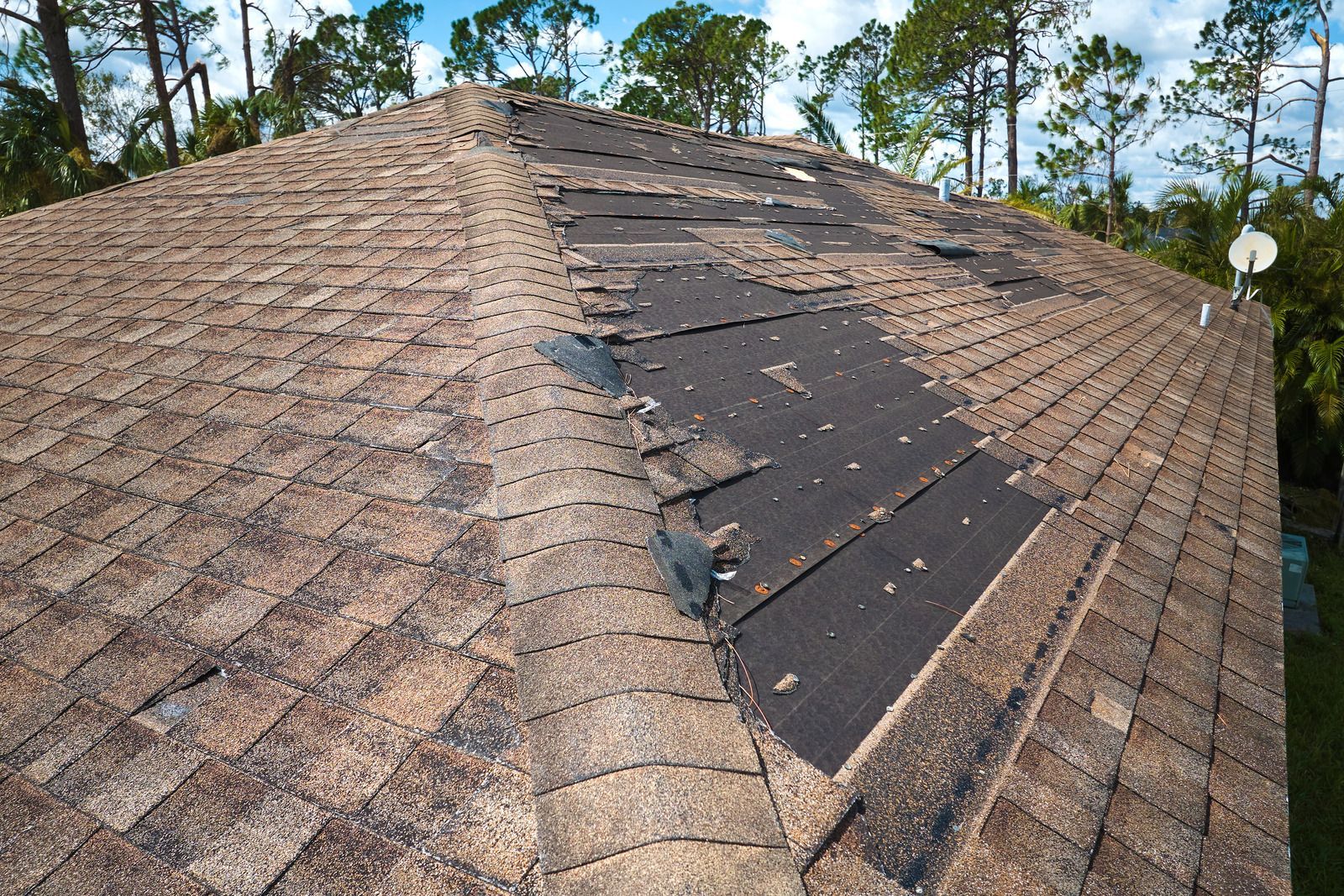
Isolated damage. A few missing or creased shingles on one side, a cracked vent cap, or a bent piece of flashing are all examples of damage that can be fixed locally. If the rest of the roof looks even in color, lies flat, and shows no bare spots, an isolated repair has a good chance of lasting.
Damage on every slope. Severe thunderstorm hail is defined by the National Weather Service as one inch across or larger, and winds are classed as severe at 58 mph and above. Storms at those levels rarely stop at one corner of a roof. When hail falls across the whole house, the bruising, granule loss, and cracking tend to show up on every slope, even if only the slopes facing the wind look obviously hurt.
Damage concentrated at edges and ridges. Wind tends to attack the ridge, the rakes, and the eaves first because pressure is highest there. If lifted or creased shingles run in a line along those edges, ask how far the seal failure extends. Tabs can lose their adhesive bond without ever coming off the roof, so the visible damage may be only part of the story.
Soft or sagging areas. If a section of the roof looks wavy or feels spongy when you press on it from the attic side, that points to decking trouble, which changes the whole conversation.
The Age Question
Asphalt shingle roofs in Oklahoma commonly land somewhere in a range of roughly 15 to 25 years, depending on the shingle type, the ventilation, and how many storms they have absorbed. Entry level shingles tend to sit at the shorter end, and heavier architectural shingles tend to last longer. The hot summers, wide temperature swings, and strong sun in this part of the state wear shingles down faster than a mild climate would.
Use age as a lens, not a verdict.
A roof under about ten years old usually has plenty of flexibility left. Repairs tend to blend in and hold, and the shingles around the damaged area can be handled without breaking.
A roof in the middle of its life is where the decision gets interesting. The shingles may still be sound, but a storm can push a mid life roof past the point where its remaining years are worth patching.
A roof near the end of its range is a poor candidate for repair even when the storm damage is small. The shingles around any patch have dried out, and a repair asks them to bend, accept new nails, and seal down again. Many of them will not cooperate.
If you do not know how old your roof is, say so. A roofer can estimate from granule wear, the profile of the shingle, and the state of the fasteners, and records from a previous owner often fill in the rest.
The Brittle Test That Decides Many Repairs
This is the part of the decision most homeowners never see, and it often decides the outcome.
To repair shingles, a roofer has to lift the shingles above the damage so the old fasteners can be removed and new shingles slid into place. On a young roof, the shingles bend and the adhesive strips release cleanly. On an older sun baked roof, the same shingles can crack across the tab, tear at the nail line, or snap off. The repair itself damages the roof around it.
Professional guidance on judging repairs makes the same point. Researchers who study shingle repair describe a repairability assessment that asks whether the repair work will spread existing damage, and they look at a damage rate across the area being worked on. That is the idea behind a careful roofer testing a few shingles gently before promising a patch.
What a roofer watches for during the test. Does the tab bend freely or does it crack? Does the sealant strip release with light pressure, or does it tear the shingle? Do the nail holes hold, or do the shingles pull through the fastener? If several test shingles break, the roof is telling you that a repair here will create new damage while fixing the old.
Tip: Ask the roofer to show you the test, not just describe it. A good contractor will lift a couple of shingles on a hidden section of the roof, let you see how they bend, and explain what they saw. Photos of the results are worth keeping if you want to compare opinions.
What Is Underneath Matters More Than the Shingles
A storm can look like a shingle problem and turn out to be a deck problem. Before choosing between a patch and a replacement, ask what the roofer found beneath the damaged area.
Underlayment. This is the water resistant layer over the decking. If it is intact and dry, a repair has a solid base. If it is torn, stained, or brittle, water has been getting past the shingles and the layer is no longer doing its job.
Decking. Plywood or boards that are dry and firm will hold fasteners and support the shingles. Decking that is dark, soft, delaminating, or crumbly has absorbed water, and soft decking has to be replaced, which means exposing the area and often more of the roof than the original damage covered.
Fasteners. Rusted or backed out nails point to moisture and movement. They are one of the quiet signs that a roof has been struggling for a while.
Ventilation. An attic that runs very hot in summer bakes shingles from below, which dries them out and makes them brittle. If your roof is aging fast because of poor ventilation, a repair does not fix the cause, and the next set of shingles will age the same way.
Decking trouble is often the point at which a repair stops making sense. Once the shingles have to come off to reach damaged boards, you are already doing much of the work of a replacement on that section.
When a Patch Is the Right Call
Repair is not the lesser option. On the right roof, it is the best option, and a good contractor will tell you so even when the bigger job would be more work for the crew.
A patch makes sense when most of these are true:
The damage is limited and well defined. A few shingles, one vent, one section of flashing, or a single valley.
The roof is young enough to be flexible. Test shingles bend and release without cracking.
The shingles are still firmly sealed. Tabs stay down when you press them, and the sealant strips have not dried out.
The decking is dry and solid. No soft spots, no stains on the underside, no signs of past leaks.
The rest of the roof is in good condition. Granules are in place, the color is even, and the flashing is sound.
When those conditions hold, a clean repair can add years to the roof. Matching also matters. Shingles fade in the sun, and new shingles beside old ones will sometimes show as a slightly different shade at first. That usually softens as the new shingles weather, and it is a small tradeoff for a roof with plenty of life left.
When Replacement Is the Honest Answer
A full replacement makes sense when the roof is telling you that its best days are behind it, and the storm simply made that obvious. Pay attention to these signs.
Damage on multiple slopes. Hail or wind that affected the whole roof leaves weakened shingles everywhere, not only where you can see holes.
Brittle shingles that crack when handled. If test shingles break, a repair will cause more damage than it fixes.
Heavy granule loss. Bald patches and granules collecting in the gutters mean the shingles have lost their protective surface and will keep aging fast.
Curling, cupping, or blistering. Sun damaged shingles often fail one after another. Patching one does not slow the others.
More than one leak. A roof that leaks in several places has a system level problem, not a single failed spot.
Soft or damaged decking. Replacing decking means removing the shingles over it, and that work is most efficient as part of a full tear off.
Repairs that keep coming back. If you have patched the same roof two or three times in a few years, the roof is signaling that the repair strategy has run out of road.
Warning: Beware of a temporary patch that is presented as a permanent fix on a worn out roof. Roofing cement smeared over cracked shingles, or a few new shingles nailed into brittle ones, can hide a problem for a season and then fail during the next storm, often at the worst time.
What a Replacement Gives You That a Patch Cannot
If the roof is near the end of its life, replacing it does more than repair the storm damage. It resets the whole system.
Everything underneath gets inspected. With the old shingles off, the crew can see every foot of decking, replace any soft boards, and install fresh underlayment across the whole roof.
Flashing and vents get renewed. Chimney flashing, pipe boots, and vents are the details that leak first, and a new roof is the best time to replace them together instead of one at a time.
Ventilation can be corrected. A new roof is the chance to balance intake and exhaust so the attic stays cooler and the new shingles last longer.
You can choose a better shingle. In hail country, many homeowners ask about impact resistant shingles or other materials when they replace. That is a separate decision, and a roofer can walk you through the options for your home.
The warranty starts over. A new roof installed by a contractor who stands behind the work comes with labor and material coverage that an old roof simply does not have.
Questions to Ask Before You Decide
Whether you are talking with us or anyone else, a few questions separate a careful assessment from a quick sales pitch.
Did you check the attic, or only the roof surface? The attic shows leaks, deck damage, and ventilation problems that the surface hides.
Did you test whether the shingles can be repaired? If the answer is no, the recommendation is a guess.
Can I see photos of what you found? A good contractor documents damage, including the places that look fine.
What happens to the rest of the roof after this repair? An honest answer includes how long the surrounding shingles are likely to last.
What will you do about flashing, vents, and decking? Those details decide whether the repair holds.
Would you recommend a repair on your own home? It is a simple question, and the answer is usually revealing.
Make the Decision Before the Next Storm
Oklahoma storms come in waves. A roof that has been damaged once is more vulnerable the next time, and a weak patch on a tired roof is exactly the kind of thing the next front finds. That is why the decision is worth making carefully and not rushing in either direction.
If you have a repair that makes sense, get it done cleanly and soon. If the roof is telling you it is finished, a planned replacement on your schedule is far better than an emergency one after the next storm, when every crew in the area is busy. Either way, the best next step is a close, honest inspection by someone who will show you what they see.
Frequently Asked Questions
How do I know if my roof can be repaired after a storm?
It usually can if the damage is limited to a few spots, the surrounding shingles still bend without cracking, the decking is dry and firm, and the roof has years of service left. A roofer confirms this by testing a few shingles and inspecting the attic.
Does the age of my roof decide whether to repair or replace?
Age is a strong clue, but it does not decide on its own. A younger roof with widespread damage may need replacing, and a middle aged roof in good condition with isolated damage can often be repaired. Condition and extent matter as much as years.
Can I replace only the damaged slope instead of the whole roof?
Sometimes. If the other slopes are healthy and the shingles can be matched reasonably well, replacing one section works. If the remaining slopes are worn or were also affected by the storm, a full replacement is usually the better long term answer.
What if the decking under the damage is soft?
Soft decking has to be replaced, and the shingles above it have to come off to do that. If it is limited to a small area, the crew can repair that section. If it is widespread, a full replacement is the sensible route.
Will new shingles match the old ones?
They may look slightly different at first because older shingles have faded in the sun. The difference usually softens as the new shingles weather. If appearance matters a lot to you, discuss it with the roofer before the work starts.
Should I wait to decide until I see whether it leaks again?
It is better not to wait. Water that gets under damaged shingles soaks the underlayment and decking, and the longer it happens, the more repair work the roof will need. A prompt inspection lets you choose your path on your terms.
Schedule a free roof inspection, because a roof that survives the next storm starts with knowing whether your damage calls for a patch or a
replacement. Our crew checks the attic, tests the shingles to see if they can be repaired without cracking, inspects the decking and flashing, and gives you an honest recommendation along with photos of what we found. As a family owned, BBB accredited roofing company with 30
years of experience and labor and material warranties, Lopez & Sons Roofing LLC
stands behind every repair and every new roof. Reach out to schedule your inspection and get a clear answer before the next front arrives.